
Team Size: 3 | Role: Designer
Responsibilities:
– Lead concept design
– Designed trade systems
– Designed player actions
– Administered playtests
– Balanced game systems

Field of Commerce is a board game that simulates historical trade routes with each player controlling a trade conglomerate with its own agenda. Each player gets random objective cards that are hidden from the other players. Players must gain 21 points from completing objective cards to win the game. The game board has different cities where resources can be generated, sold, and stored. Players can try to seize optimal trade routes, trade with players, and trade with the cities to achieve their goals.
I made this game with two friends of mine after researching game economy systems in Game Balance by Ian Schreiber and Brenda Romero. Inspired by Settlers of Catan and Ticket to Ride, we based our trade route map off of the Hanseatic trade routes of the 14th century.
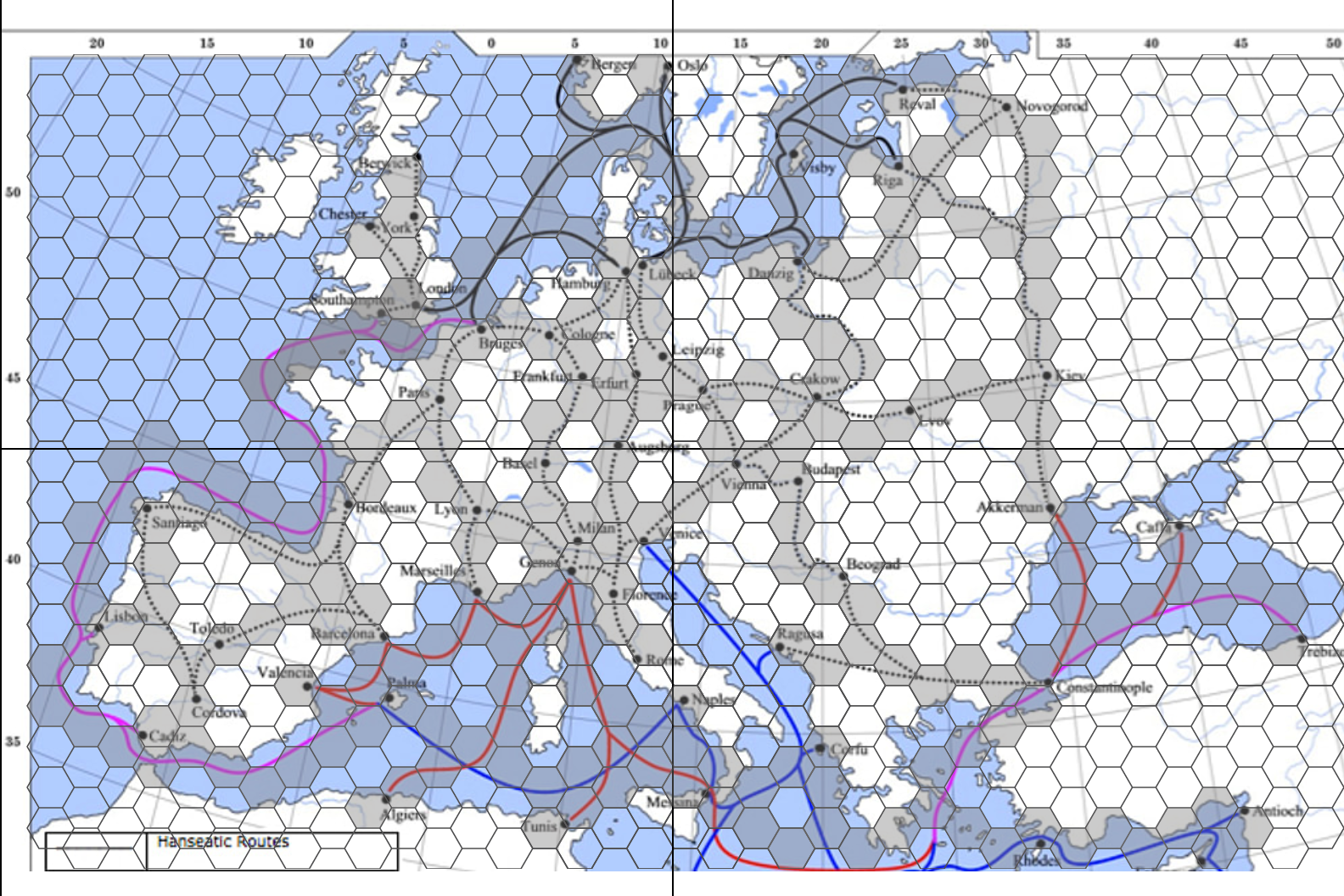
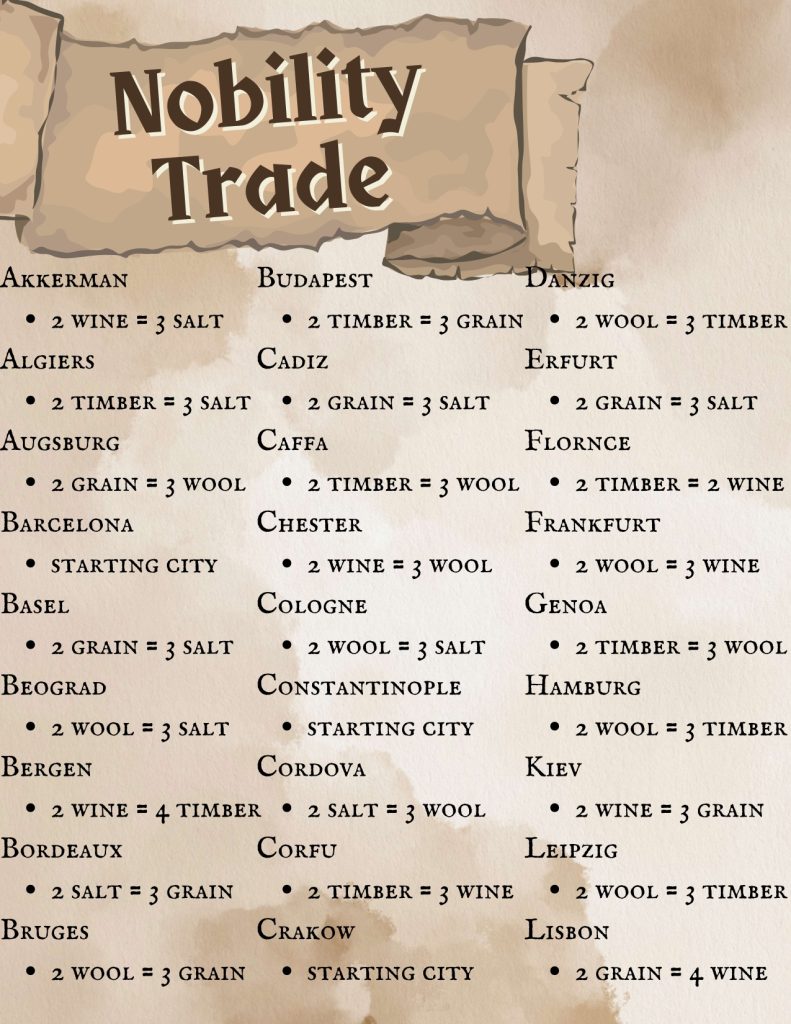
We used maps and hexagonal grids to map out distance and player speed. To develop accurate resource types I researched the common exports of each listed city. Using the five most common exports as well as the cities that delt with them, I created the resource trade list used as the keystone of game.
Part of Original Research List
Akkerman
– Grain
– Salt
Algiers
– Salt
– Wool
Augsburg
– Wool
Barcelona
– Wine
– Wool
Basel
– Wool
– Salt
– Wine
Beograd
– Grain
– Wool
– Wine
Bergen
– Timber
Bordeaux
– Wine
– Wool
– Salt
Bruges
– Grain
– Salt
Budapest
– Wool
– Grain
– Salt
Cadiz
– Wine
– Salt
Caffa
– Grain
– Wool
Chester
– Wool
– Salt
Cologne
– Wine
– Salt
Constantinople
– Grain
Cordova
– Wool
Corfu
– Wine
Crakow
– Wool
– Salt
– Grain
Danzig
– Grain
– Timber
Part of Final Trade List
I ran multiple playtests throughout development. These playtests were run through volunteers and local game dev organizations. These playtests were used to revise and confirm a balanced product and simplify the player experience.